
Cognitive Biases: why does my brain lie? How does it impact my relationship to media?
Our brain is a powerhouse. It never really stops. It lets us talk, touch, smell, taste, feel, and live. But because it’s handling so much at once, it can’t give every single task the same level of attention. To keep us functioning, our brain takes shortcuts.
Think of that friend who can’t say “no” and ends up drowning in work. That friend is your brain. To keep the boat afloat, your brain simplifies some decisions. In psychology, this phenomenon is called heuristic (a mental shortcut that helps us react quickly).
The catch? When these shortcuts backfire, they lead to cognitive biases and they are everywhere! (especially in media). These biases shape how we interpret information, sometimes pushing us to jump to conclusions without even realizing it.
So why does our brain “lie”? It’s simple: our brain is trying to protect us and help us navigate our chaotic, unpredictable world.
The different types of cognitive biases:
Cognitive biases are as ubiquitous as smartphones. Here are the most influential ones when it comes to media with an example to ease their understanding.


2. Authority Bias
Your favorite influencer swears a product helps their hair grow. Even if they’re not an expert, you believe them because…well, they’re your favorite influencer, and you love their hair. You trust someone just because they seem trustworthy. This ties in with parasocial relationships (check our resources if you want to dive deeper).

3. In-Group Bias
All your friends say vegetarian diets are unhealthy. You believe it too. Not because you’ve researched it, but because your inner circle thinks so. You adopt the opinions of your group because, well, they’re your group and if you want to continue hanging out with them, it’s easier to share opinions.

4. Illusory Truth Bias
Every day you see and ad on the subway claiming that “Lemon shampoo naturally lightens hair”. After weeks of repetition, you’re tempted to give it a try. If you hear, see, encounter something enough times, you start to believe it (whether it’s true or not).

5. Anchoring Bias
News breaks that a batch of cheese is contaminated. Even after it’s clarified that only some products were affected, you hesitate to buy cheese at all. The first piece of information you hear sticks. The first information you hear keeps having more importance over the following ones.
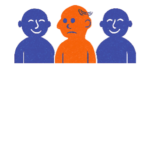
6. Conformity Bias
Your town supports building a new railway, even though it might harm endangered birds. You support it too because you don’t want to be the odd one out, and you want to feel part of your community.
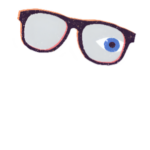
7. Selective Perception Bias
If you don’t work in the fields, you might not feel affected by a new agriculture law and its impact on workers. But when you hear that this new law could dampen imports of your favourite matcha, you are paying close attention to it. As we are constantly encountering thousand if not millions of information everyday, to cope with it we tend to pay more attention to news that affects us personally.
Want to dig deeper?
Cognitive biases shape how we see the world (especially through the media). The good news? Once you are aware of them and you learn to spot them, you can start to question your assumptions and think more critically. If you wish to learn more on cognitive biases or the influence of media, check out our resources (https://pixelmedia-project.eu/pixelpedia/) for more examples, tips, and tools.
REFERENCES
- Masotina, M. (2024, August 26). Cognitive biases in news-making and fact-checking: A mixed methods approach. EDMO. Retrieved from https://edmo.eu/blog/cognitive-biases-in-news-making-and-fact-checking-a-mixed-methods-approach/
- Friedman, H. H. (2023). How to overcome cognitive biases that skew your perception and lead to bigotry. SSRN. https://doi.org/10.2139/ssrn.4507064
- Buss, David M. (2015). The Handbook of Evolutionary Psychology (Buss/The Handbook of Evolutionary Psychology) || The Evolution of Cognitive Bias. , 10.1002/9780470939376(), 724–746. https://doi.org/10.1002/9780470939376.ch25