
Beyond the screen: how video games represent otherness and diversity
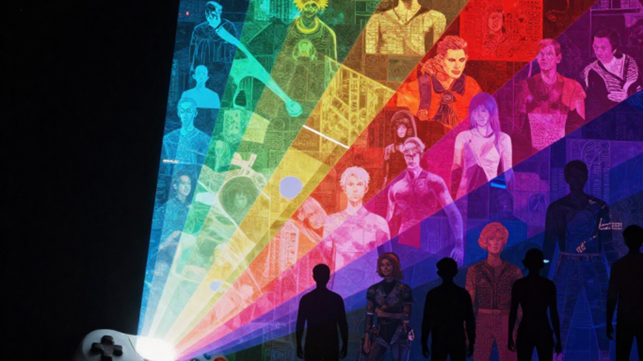
Video games are more than just entertainment; they are a high-definition reflection of our world, capturing the sharp detail of our creative progress alongside the distorted pixels of our social contradictions. For decades, the “gamer” archetype was narrowly defined: a young, white, heteronormative male. This single-perspective vision didn’t just influence who played the games, but who made them and, crucially, who was represented on screen.
As part of the PIXEL MEDIA project, we are exploring how media literacy can help us decode these representations. Is the gaming universe still a “boys’ club” characterized by patriarchal machismo, or are we witnessing a transformative shift toward true inclusivity?
The legacy of “video game machismo”
Historically, mainstream gaming originated as an expression of the North American military-industrial complex. In other words, early video game development was strongly influenced by military technology, funding, and culture (especially in North America). This shaped some of the early design choices and themes that later became part of mainstream gaming. For example, early computer systems used for military simulations, training, and visualization were also used to create some of the earliest digital games (e.g., “Spacewar”, a space combat video game developed by Steve Russell).
This heritage often favoured hypermasculine perspectives where “gameplay” was synonymous with violence and conquest. Feminist and queer culture scholars highlight a persistent “video game machismo” (Chess, 2020; Shaw, 2014) that defines the ancestral heritage of the medium.
Studies conducted throughout the 2000s (Nardone, 2023 b) revealed striking statistics regarding game covers and character roles:
- Male dominance: The vast majority of protagonists depicted on covers are men.
- The “sidekick” syndrome: Female characters frequently appear only as supporting figures who need protection or serve as guides to a male lead, rarely driving the plot themselves.
- ‘Eye candy’ objectification: Nearly half of female characters were classified as having no narrative purpose other than visual stimulation.
- The paradox of power: In the rare instances where women exercise power or violence, it is almost always accompanied by exaggerated sexuality—such as breasts of unrealistic sizes—which serves as sexist objectification rather than a reflection of character strength (Burgess, Burgess & Stermer, 2007).
Challenging the binary
Diversity isn’t just about gender; it’s about breaking the binary. Queer theory in gaming investigates the intersections of non-heterosexual identities to challenge the “privilege of heteronormativity.” By moving away from the rigid female/male or feminine/masculine categories, developers are beginning to recognize that identity is far more complex and fluid than a simple toggle switch in a menu.
The Turning Point: Indie Games and New Voices
The 21st century has brought a wave of change. National and international surveys show a steady increase in female gamers and players from diverse backgrounds. This shift is driving the market to diversify its offerings, but the real revolution is happening in the Indie scene.
Thanks to accessible development tools, independent creators are using video games to tell:
- Autobiographical stories that explore personal identity.
- Social and political narratives addressing marginalized experiences.
- Non-traditional roles where characters are active, unlabelled, and no longer marginalized (Shaw, 2014).
Representation is not just about “seeing yourself” in a game; it’s about allowing everyone to see a multitude of identities existing together. When a game offers an “open” perspective—through deep character customization or multifaceted narratives—it confirms that everyone has a place in the digital world.
Why media literacy matters for gamers
Understanding these tropes is a core component of media literacy. A literate player can:
- Recognize stereotypes: Identify when a character is being objectified or sidelined.
- Support diverse creators: Seek out titles that break the mold and offer fresh perspectives.
- Engage critically: Understand the social impact of the stories they consume.
The video game industry is undergoing a profound transformation. By opening up to more complex imaginaries, it allows us to experiment with new roles and perspectives, ultimately helping those on the margins feel accepted and understood.
References:
- Burgess, M. C. R., Stermer, S. P., Burgess, S. R. (2007). Sex, Lies, and Video Games: The Portrayal of Male and Female Characters on Video Game Covers. In Sex Roles, 57, 419–433 https://doi.org/10.1007/s11199-007-9250-0 Burgess, M. C., Burgess, S. R., & Stermer, S. P. (2012). Sex, Lies, and Video Games: The Portrayal of Male and Female Characters on Video Game Covers.
- Chess, S. (2020). Play like a Feminist. London England. The MIT Press
- Nardone, R. (2023 a). Genere e industria videoludica: complessità e possibilità di ruoli in gioco. In Micalizzi A. (ed.) Poche. La questione di genere nell’industria culturale italiana. WriteUp Books
- Nardone, R. (2023 b). Genere, genti e generazioni. La rappresentazione nelle narrazioni videoludiche e mediatiche. In Caratteri mobili – LI.B.E.R. LIBRI PER BAMBINI E RAGAZZI, 140, IV
- Shaw, A. (2014). Gaming at the Edge. Sexuality and Gender at the Margins of Gamer Culture. University of Minnesota Press. Minneapolis.